Does Sterling Silver Tarnish? Causes, Cleaning and Care
Quick answer: Yes, sterling silver tarnishes. Tarnish is a thin layer of silver sulfide that forms when silver reacts with sulfur compounds in the air; it is a natural property of real silver, not a defect. Humidity, perfume, sweat, chlorine and cosmetics speed it up. Light tarnish comes off with warm water, a little mild soap and a silver polishing cloth. Oxidised (dark) finishes should not be polished.
Why does sterling silver tarnish?
Sterling silver is 92.5% silver and 7.5% other metals (usually copper) for strength. Sulfur compounds in the air react with the surface, first turning it yellowish, then brown or black. Moist storage, perfume, lotions, sweat, pool and sea water all accelerate the process.
How to clean silver jewelry
| Level | Method | Caution |
|---|---|---|
| Light dullness | Silver polishing cloth | Avoid stones and oxidised areas |
| Moderate tarnish | Warm water, mild soap, soft toothbrush, rinse and dry fully | Do not soak cord, leather or natural stones |
| Heavy tarnish (plain silver) | Gentle baking soda paste with a soft cloth | Never on oxidised or gold-plated pieces |
What not to do
- Toothpaste is abrasive and can scratch silver.
- Bleach and chlorine can damage silver permanently.
- Polishing an oxidised piece removes its intentional dark finish.
- Rub gold-plated pieces only with a soft, dry cloth.
Prevent tarnish
- Apply perfume and lotion before putting jewelry on.
- Remove jewelry before showering, swimming and exercise.
- Wipe pieces after wearing and store them separately in closed pouches, away from the bathroom.
Silver or stainless steel?
Sterling silver has the classic feel of a precious metal but needs regular care; stainless steel is more resistant to tarnish and needs less maintenance. Explore Atolyewolf silver collections or the stainless steel Archive by Atolyewolf. For care and repairs, see jewelry care and repair & renew.
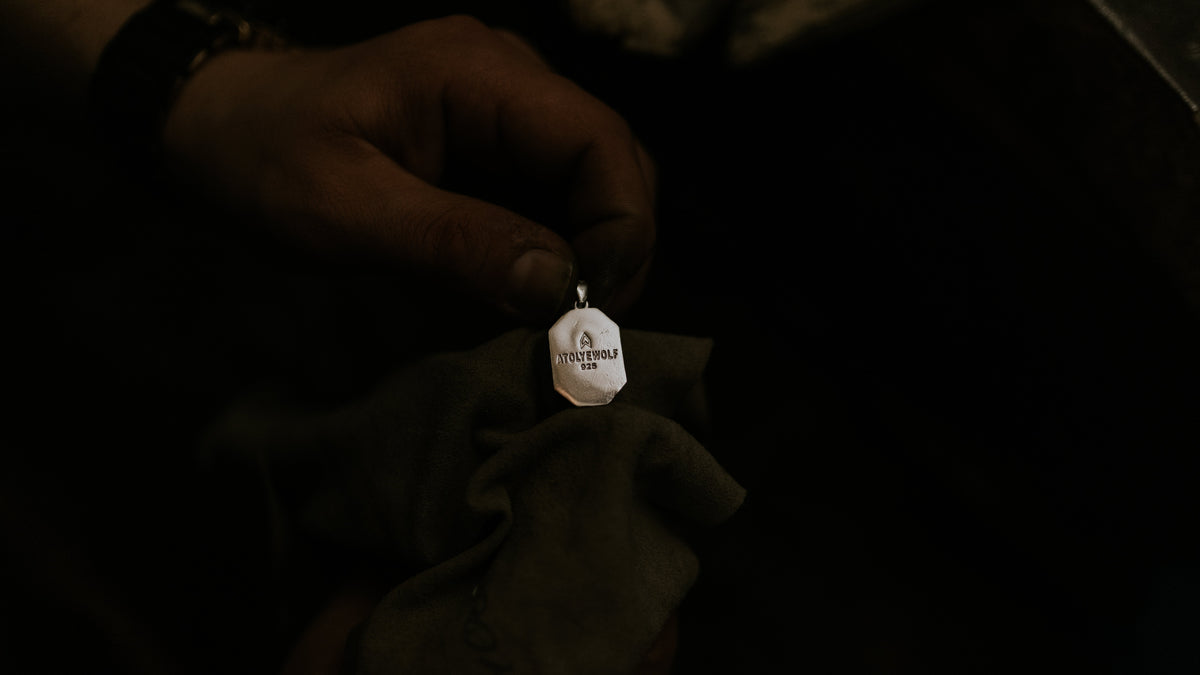
Sterling silver and steel examples