How to Tell If Gold Is Real
A bracelet inherited from a relative, a second-hand ring or a necklace bought online... It is perfectly natural to wonder whether the piece in your hand is real gold. As gold-plated and fake jewelry improves in quality, telling the difference at first glance is getting harder. On top of that, the wrong test can permanently damage a valuable piece. So how can you tell if gold is real? In this guide you will find simple methods you can use at home to separate real gold from fakes, which tests are reliable and which are myths, the professional methods jewellers use and the differences between plated, filled and solid gold. By the end, you will also know how to protect yourself when shopping.
How to Tell If Gold Is Real: The Short Answer
The most reliable way to tell real gold is to take the piece to a jeweller or an authorised assay office. At home, non-damaging methods such as checking the hallmark, the magnet test, the ceramic streak test and the vinegar test can give you an initial idea. No home test is 100% conclusive on its own, but using several together gives a strong indication.
Another point to remember is that some jewelry is sold openly as gold-plated. Such products are not fake but a different type of production. What matters is that the seller shares material information transparently.
How to Tell If Gold Is Real at Home: 7 Methods
1. Check the Hallmark
Most real gold jewelry carries a small purity stamp, usually inside a ring, on a necklace clasp or on the back of an earring. Numbers such as "585", "750" and "916" or marks such as "14K", "18K" and "22K" indicate the gold purity. Letters such as "GP", "GF" and "HGE" indicate plated or filled gold. A missing hallmark does not always mean the piece is fake, but it is a reason for caution. Remember that fake hallmarks exist too.
2. The Magnet Test
Gold is not magnetic, so it does not stick to a strong magnet. If the piece is clearly attracted to a magnet, it contains other metals such as iron or nickel. But this test is not enough on its own: plated jewelry made from non-magnetic metals such as copper or silver will not stick either. Also, small parts such as clasps and springs may be steel even on real gold jewelry.
3. The Ceramic Streak Test
Find an unglazed ceramic surface; the ring on the base of a cup or plate is ideal. Gently rub the piece across it. Real gold leaves a golden-yellow streak, while fake or plated jewelry leaves a black or grey one. As this test can cause very slight wear on the surface, do it carefully on a hidden spot.
4. The Vinegar Test
Put a few drops of white vinegar on the piece or leave it in a bowl of vinegar for a few minutes. Real gold is unaffected and keeps its colour. If you see a colour change, darkening or greening, the piece is most likely not gold. Avoid this test on jewelry with stones; some stones can be damaged by acid.
5. The Water (Density) Test
Gold is a very dense metal and sinks quickly in water; it does not float or hover. This test gives only a rough idea, because many metals also sink. For a more precise result, you need to measure the piece's volume and weight to calculate density, which usually requires jeweller's equipment.
6. The Skin Test
Wear the piece in contact with your skin for a while. Real gold usually leaves no mark. If a green or black mark appears, the piece is mostly made of other metals such as copper. However, low-karat real gold can leave a faint mark on some skin types, so this test is only a supporting clue.
7. Weight and Colour
Real gold feels noticeably heavier than a fake piece of the same size. Its colour is warm, deep and even. If a different metal colour shows through the gold at the edges, on clasps or in areas of frequent friction, the piece is most likely plated.
| Test | Real Gold | Fake / Plated | Reliability |
|---|---|---|---|
| Hallmark | 585, 750, 916 etc. | GP, GF, HGE or none | Medium (fakes exist) |
| Magnet | Not attracted | May be attracted | Low – medium |
| Ceramic streak | Golden-yellow streak | Black or grey streak | Medium – high |
| Vinegar | No colour change | Darkens or turns green | Medium |
| Water | Sinks quickly | Most also sink | Low |
| Skin | No mark | Green or black mark | Low |
"Tests" You Should Not Do
Some common methods for checking whether gold is real are actually unreliable and harmful. Biting the piece is a myth from the movies that can damage both your teeth and the jewelry. Heating it with a lighter or flame can crack stones, ruin plating and risk burns. Scratching or cutting the piece with a file also permanently reduces its value. It is always better to avoid these methods and seek a professional assessment.
Professional Methods Jewellers Use
For a definitive result, jewellers and assay offices use more advanced methods. These are fast and determine the purity precisely.
- Touchstone and acid test: The piece is rubbed on a special black stone and acids prepared for different karats are applied to the streak. Whether the streak dissolves determines the purity.
- XRF (X-ray fluorescence) analyser: Analyses the metal content in seconds without damaging the piece; one of the most reliable methods today.
- Electronic gold testers: Measure the piece's conductivity to indicate purity.
- Density measurement: Calculations with a precision scale reveal the piece's density and therefore its gold content.
Solid, Filled and Plated Gold: The Differences
Knowing these three concepts is essential when working out how to tell if gold is real, because a piece may contain gold even if it is not entirely gold.
| Type | Definition | Hallmark Example | Resale Value |
|---|---|---|---|
| Solid gold | The entire piece is made of gold alloy | 585, 750, 916 | Yes (based on gold value) |
| Gold filled | A thick gold layer is pressed onto a base metal | GF, 1/20 14K | Limited |
| Gold plated | A thin gold layer is plated onto a base metal or silver | GP, HGE, 925 (for a silver body) | Value of the body metal |
Is Gold-Plated Jewelry Fake?
No. Gold-plated jewelry sold with clear material information is not fake but a different category. It aims to offer the beauty of gold at a more accessible price. The problem is when a plated product is sold as solid gold.
Atolyewolf's gold-tone jewelry is completely transparent about this: the body is 925 sterling silver and the surface is plated with 18K gold. This information is clearly stated in every product description. So when you buy a piece such as the Zodiac Chain Bracelet in Gold or the Gold-Plated Silver Onyx Shambala Bracelet, you know exactly what you are getting. Thanks to its silver body, the piece is durable and carries a "925" hallmark.
| Category | Example Model | Material | Price Range |
|---|---|---|---|
| Bracelet | Zodiac Chain Bracelet in Gold | 925 silver + 18K gold plating | Mid-range |
| Stone bracelet | Gold-Plated Silver Onyx Shambala Bracelet | 925 silver + 18K gold plating, natural onyx | Premium |
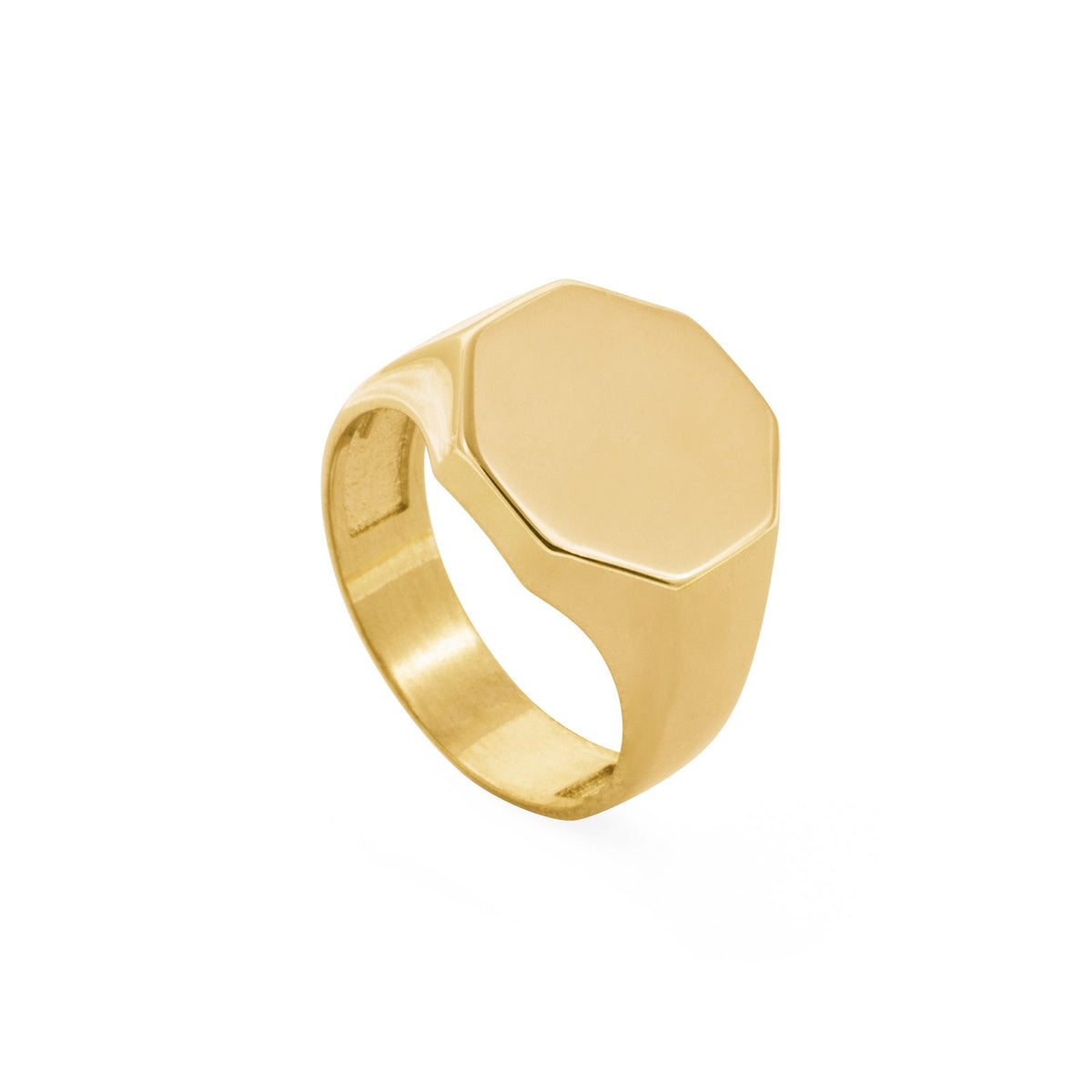
| Ring | Gold-Plated Octagonal Men's Ring | 18K gold plating | Accessible |
| Personalised | Design Your Charm Bracelet | Gold-plated charm option | Accessible |
Price ranges are a general guide; you can find current prices on the product pages.
How to Protect Yourself When Buying Gold
The best way to avoid fake gold is to buy correctly from the start. The steps below will protect you both at the jeweller's and online.
- Invoiced purchase: Ask for an invoice stating purity and weight.
- Trusted seller: Choose well-known sellers with clear return and exchange policies.
- Clear material information: Make sure the description states whether the piece is solid, filled or plated.
- Realistic price: Be wary of offers far below the day's gold price.
- Expert opinion: Always have second-hand or inherited pieces checked by a jeweller.
Frequently Asked Questions
How can you tell if gold is real?
At home, hallmark, magnet, ceramic streak and vinegar tests give an initial idea; for a definitive result, have it tested by a jeweller or with an XRF analyser.
Does real gold stick to a magnet?
No, gold is not magnetic. But not sticking to a magnet does not prove on its own that a piece is real gold.
Does gold tarnish in vinegar?
No, real gold is unaffected by vinegar. A colour change suggests the piece is not gold.
Does a 925 hallmark mean gold?
No, a 925 hallmark indicates 925 sterling silver. Gold-plated silver jewelry carries this stamp.
Knowing what you are buying increases a piece's value and your enjoyment of it. Browse the bracelet collection to discover gold-plated designs with transparent material information, explore our rings or design your own charm bracelet.