Sapphire: Meaning and Colours
When we think of sapphire, most of us picture a deep, velvety blue. Featured in many legendary pieces, from royal jewelry to famous engagement rings, this stone has been seen for centuries as a symbol of nobility and loyalty. Yet few people know that this precious stone is not only blue; it can be found in almost every colour of the rainbow, from pink to yellow and green to orange. This can cause confusion when buying or choosing a gift. In this guide you will discover what sapphire is, its colour options and where they come from, the meanings it carries, the criteria that set its value and how it is used in jewelry. By the end, you will also discover alternatives that bring the elegance of blue into your style.
What Is Sapphire? A Short Definition
Sapphire is the name given to every colour variety of the mineral corundum except red. Chemically, corundum is aluminium oxide and has an extremely hard structure. With a hardness of 9 on the Mohs scale, it is one of the hardest natural stones after diamond. This hardness makes it an ideal stone for rings and bracelets worn every day.
The red variety of corundum has a separate name: ruby. So sapphire and ruby are actually different-coloured versions of the same mineral. Its name comes from the Latin and Greek "sapphirus" and has been used throughout history to describe blue stones.
| Attribute | Value |
|---|---|
| Mineral | Corundum (aluminium oxide) |
| Hardness (Mohs) | 9 |
| Colours | Blue, pink, yellow, green, purple, orange, colourless |
| Source of blue colour | Trace iron and titanium |
| Main sources | Sri Lanka, Myanmar, Madagascar, Kashmir, Thailand, Australia |
| Birthstone | September |
What Colours Does Sapphire Come In?
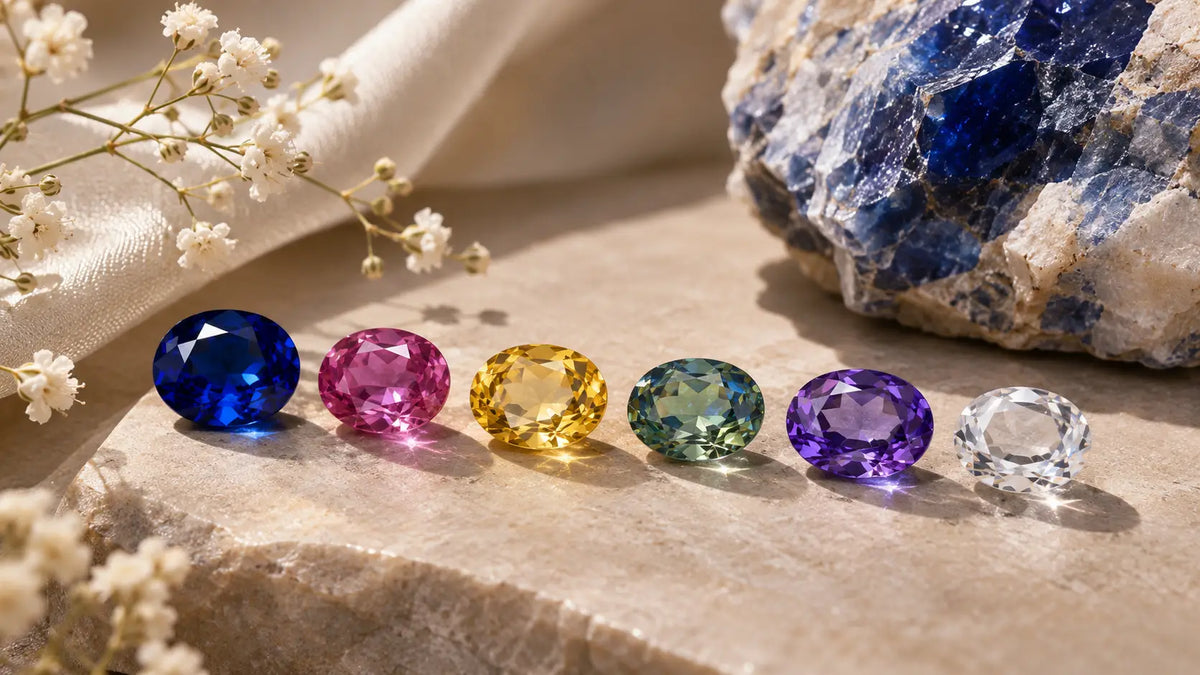
The sapphire colour range is shaped by trace elements in the stone's structure. Pure corundum is colourless; very small amounts of elements such as iron, titanium, chromium and vanadium give it colour. That is why the same mineral can form in completely different tones under different conditions.
Blue Sapphire
This is the best-known and most sought-after type. It gets its colour from iron and titanium together. It ranges from light sky blue to navy so dark it is almost black. The most valuable are the vivid, deep tones described as "royal blue" and the velvety "cornflower blue" stones from Kashmir.
Fancy Sapphires
Colours other than blue are called "fancy sapphires". Pink sapphire gets its colour from chromium and yellow sapphire from iron. Green, purple and orange tones also occur in nature. Colourless or "white sapphire" is often used as an affordable alternative to diamond.
Padparadscha
One of the rarest and most valuable members of the sapphire family. Its name comes from the Sinhala word for "lotus flower", and it offers a unique blend of pink and orange. It usually comes from Sri Lanka.
| Colour | Source of Colour | Key Feature |
|---|---|---|
| Blue | Iron and titanium | The most classic and sought-after type |
| Pink | Chromium | Popular in romantic and modern designs |
| Yellow | Iron | A warm, lively alternative |
| Green | Iron | Natural, calm tones |
| Colourless (white) | No trace elements | An affordable alternative to diamond |
| Padparadscha | Chromium and iron | The rarest, pink-orange |
How Is Sapphire Colour Quality Assessed?
When assessing a stone's colour, gemmologists look at three basic elements: hue, saturation and tone. Hue is the colour itself, its blue, violet or green tendency. Saturation shows how intense and vivid the colour is; grey or brown shadows lower it. Tone describes how light or dark the colour is. The most valuable sapphire colours are close to pure blue, highly saturated and medium-dark in tone.
Even colour distribution also matters. In some stones colour concentrates in zones; this is called "colour zoning" and can be minimised with a good cut. When buying, examining the stone in both daylight and artificial light helps you judge its colour performance accurately. Some stones show different tones depending on the light source, so sapphire colour should be assessed under different lighting.
What Does Sapphire Mean?
Throughout history, sapphire has been associated with wisdom, loyalty, nobility and honesty. In ancient Greece it was considered the stone of Apollo, god of wisdom, and oracles wore it when consulted for prophecies. In the Middle Ages, kings and clergy wore it as a symbol of protection against evil and divine favour.
Because its blue is identified with the sky, it has also come to mean peace, calm and mental clarity. Its strong link with loyalty means it is often chosen for engagement rings. It is September's birthstone and is traditionally the stone for 5th and 45th wedding anniversaries. These meanings are cultural and symbolic; they carry no scientifically proven effect.
What Determines a Sapphire's Value?
The value of precious stones is usually determined by four criteria known as the "4Cs". For sapphire, by far the most important is colour.
- Colour: A vivid, saturated and evenly distributed colour has the highest value. Very light or very dark tones reduce value.
- Clarity: Small inclusions are normal in natural sapphires, but visible cracks reduce value.
- Cut: A good cut shows off the colour best and gives the stone brilliance.
- Carat: Because large quality stones are rare, value rises steeply with carat weight.
Most sapphires on the market are heat-treated to improve colour and clarity. This is a common and accepted practice, but untreated natural stones are far more valuable. Laboratory-grown synthetic sapphires also exist. For a valuable purchase, ask for a gemmological certificate documenting the stone's origin and any treatments.
How Is Sapphire Used in Jewelry?
Thanks to its high hardness, sapphire is used safely in all types of jewelry, including rings, necklaces, earrings and bracelets. Its most famous use is in engagement rings; classic designs with a blue stone surrounded by small white stones offer timeless elegance. In men's jewelry, it is usually chosen in dark blue for signet rings or cufflinks.
Metal choice also matters with sapphire colour. Blue stones look best with cool metals such as white gold, platinum and silver, while yellow and orange fancy sapphires create a warmer effect with yellow gold. Pink sapphires form a romantic harmony with rose gold.
Alternatives That Carry the Elegance of Blue
For those who love sapphire's deep blue but want a more accessible option, there are lovely alternatives. Lapis lazuli, with its dark navy tone flecked with golden pyrite, has been one of the most loved blue stones alongside sapphire throughout history. Used in the jewelry of Egyptian pharaohs, it is associated with wisdom and honesty.
Atolyewolf's natural stone bracelets include lapis options, available as single, double and triple strands with 925 sterling silver, oxidised or gold clasps. For a simple take on blue, the zodiac cord bracelets bring the same calm tone to everyday style with a navy cord option. With Design Your Charm Bracelet, you can also add personal charms to a navy cord.
| Option | Colour Tone | Hardness (Mohs) | Example Model | Price Range |
|---|---|---|---|---|
| Blue sapphire | Royal blue | 9 | — | — |
| Lapis lazuli | Dark navy, gold-flecked | 5 – 6 | Triple Natural Lapis Bracelet | Mid-range |
| Lapis lazuli | Dark navy | 5 – 6 | Thick Natural Lapis Bracelet | Premium |
| Navy cord | Navy | — | Silver Zodiac Cord Bracelet | Accessible |
Price ranges are a general guide; you can find current prices on the product pages.
How to Style Blue Stones
Blue-toned stones harmonise elegantly with white, grey, cream, navy and brown. In men's outfits, a lapis bracelet worn with a white shirt and navy blazer reflects the noble presence of sapphire blue in a simple language. With a grey suit, blue stones on a silver clasp create a sophisticated, modern accent.
In women's outfits, a blue-stone necklace or earrings worn with a cream or white dress brighten the face. Silver is the metal that best complements the cool shine of blue stones, while gold offers a warmer, more contrasting look.
Frequently Asked Questions
What colour is sapphire?
Its best-known colour is blue, but there are also pink, yellow, green, purple, orange and colourless varieties. Red corundum is called ruby.
Where does sapphire's colour come from?
Blue comes from iron and titanium, pink from chromium and yellow from iron.
Which month's stone is sapphire?
It is September's birthstone.
What is the most valuable sapphire colour?
Vivid, deep royal blue and Kashmir cornflower blue are the most valuable tones; pink-orange padparadscha is also extremely rare.
It is time to bring the noble elegance of blue into your style. Browse the bracelet collection to discover lapis models, explore zodiac bracelets with a navy cord option, or design your own charm bracelet.