What Is Citrine and What Are Its Benefits?
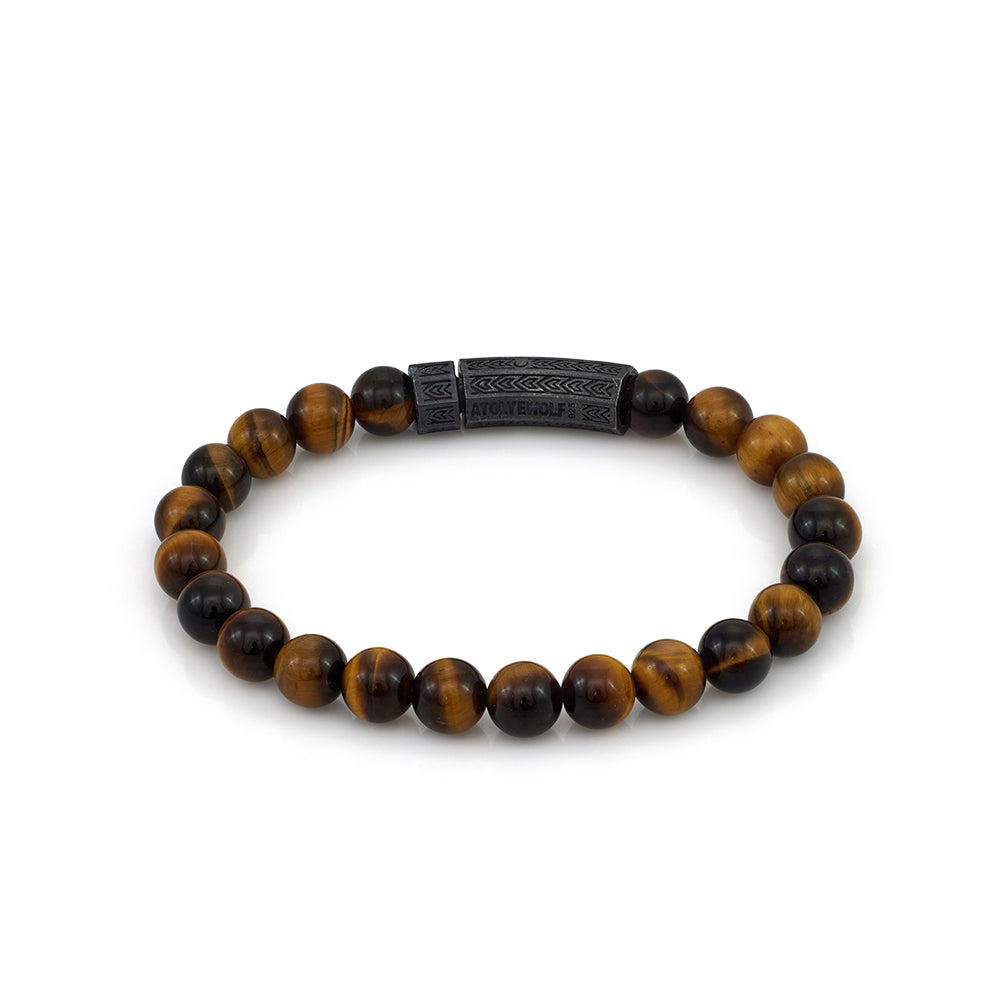
The golden-brown beaded bracelet on the cover illustrates the warm colour alternatives discussed below.
With yellow and honey tones reminiscent of sunlight, citrine is one of the most cheerful-looking natural stones. Also known as the "stone of abundance" or the "merchant's stone", this variety of quartz has attracted great interest in the jewelry world in recent years for both its beauty and the positive meanings attributed to it. But did you know that a large share of the yellow quartz sold on the market is not natural citrine, but another stone that has been heat-treated? In this guide you will discover what citrine is, how it forms, the traditional beliefs about the benefits of citrine, how to tell natural stones from treated ones and how it is worn in jewelry. By the end, you will also discover alternatives that bring this warm energy into your style.
What Is Citrine? A Short Definition
Citrine is a transparent natural stone from the quartz family, found in yellow, golden yellow and orange tones. It gets its colour from trace amounts of iron in its crystal structure. Its name comes from the French "citron", meaning lemon. It is considered one of November's birthstones and, together with topaz, a symbol of that month.
Natural citrine is quite rare. Most stones sold as "citrine" today are made by heating amethyst or smoky quartz to high temperatures. This process permanently turns the stone yellow-orange. Heat-treated stones are still genuine quartz, but they are worth less than natural citrine and the seller should state this clearly.
| Attribute | Value |
|---|---|
| Mineral family | Quartz |
| Hardness (Mohs) | 7 |
| Colours | Pale yellow, golden yellow, honey, orange, Madeira (reddish brown) |
| Source of colour | Trace amounts of iron |
| Main sources | Brazil, Bolivia, Madagascar, Russia |
| Birthstone | November |
The Meaning of Citrine
Throughout history, citrine has been associated with the sun and abundance. It was used as an ornamental stone in ancient Greece and Rome, and in the 19th century became popular in Scottish jewelry, especially on sword hilts and brooches. The name "merchant's stone" comes from the old belief that keeping the stone in a till or on a counter would bring prosperity.
Today the stone is most associated with optimism, confidence, creativity and abundance. Because its warm colour conveys joy and vitality, it is a popular gift among those seeking motivation, starting a new job or wanting a positive new beginning.
What Are the Benefits of Citrine?
The properties known as the benefits of citrine are largely based on traditional beliefs and crystal culture. When considering them, an important distinction should be kept in mind: these are not scientifically proven effects and are no substitute for medical or psychological treatment. Still, they offer a good framework for understanding why the stone is so loved.
Citrine's Benefits According to Tradition
- Abundance and prosperity: Believed to attract material wealth and opportunities, hence its nickname "money stone".
- Confidence: Thought to support self-belief and determination.
- Creativity: Considered to nourish new ideas and the flow of inspiration.
- Optimism: Its sun-like colour represents joy and a positive outlook.
- Motivation: Believed to revive the energy needed to reach goals.
What Science Says
There is no reliable scientific study showing that natural stones directly affect mood, health or finances. Even so, citrine benefits can have value as a personal meaning and reminder: seeing a piece of jewelry that represents a goal every day may psychologically help a person stay focused on it. The healthiest approach is to choose this stone for its beauty and symbolism.
Traditional Ways to Use It
In crystal culture, the most common way to enjoy the benefits of citrine is to wear it in contact with the skin as a ring, bracelet or necklace. Some people prefer to place a small piece on their desk or in their till. Although beliefs about citrine's benefits vary from person to person, the common thread is that the stone represents a goal and a positive intention. Remembering that intention every time you see the stone is the real meaning of the practice.
How to Tell Natural Citrine
Telling natural citrine from heat-treated amethyst is often possible even with the naked eye. The tips below can guide you; for a valuable piece, asking for a certificate from a gemmological laboratory is the right path.
- Colour distribution: Natural citrine is usually a pale, soft and even yellow. Heated stones may be dark orange or reddish brown.
- Crystal points: In rough clusters, stones with dark orange tips and a whitish base are usually heated amethyst.
- Signs of nature: Natural stones may show slight colour variations and small inclusions.
- Price: Be wary of large, intensely coloured stones priced far below the market.
- Glass imitations: Pieces with tiny air bubbles that warm up quickly in the hand may be glass.
| Feature | Natural Citrine | Heat-Treated Amethyst | Glass Imitation |
|---|---|---|---|
| Colour | Pale, soft yellow | Dark orange, reddish | Very vivid, flat |
| Colour distribution | Slightly uneven | Intense at tips, white at base | Completely uniform |
| Inner structure | May have natural flaws | May have natural flaws | Air bubbles |
| Value | High | Medium | Low |
How Citrine Is Used in Jewelry and Who Wears It
With a hardness of 7 on the Mohs scale, this stone is well suited to jewelry worn every day. In women's jewelry it is chosen for rings, pendants and earrings; in men's jewelry, usually for rings and natural stone bracelets. Because it harmonises naturally with gold tones, it is often set in gold plating or yellow gold.
November babies, people starting a new job or project, entrepreneurs and anyone wanting to add joy and motivation to their life often choose this stone. As a gift, it carries the message "may your new beginning be prosperous", which makes it meaningful. In astrology, its warm, sunny energy links it especially with Leo, Gemini and Aries.
Jewelry Options Close to Citrine's Warm Energy
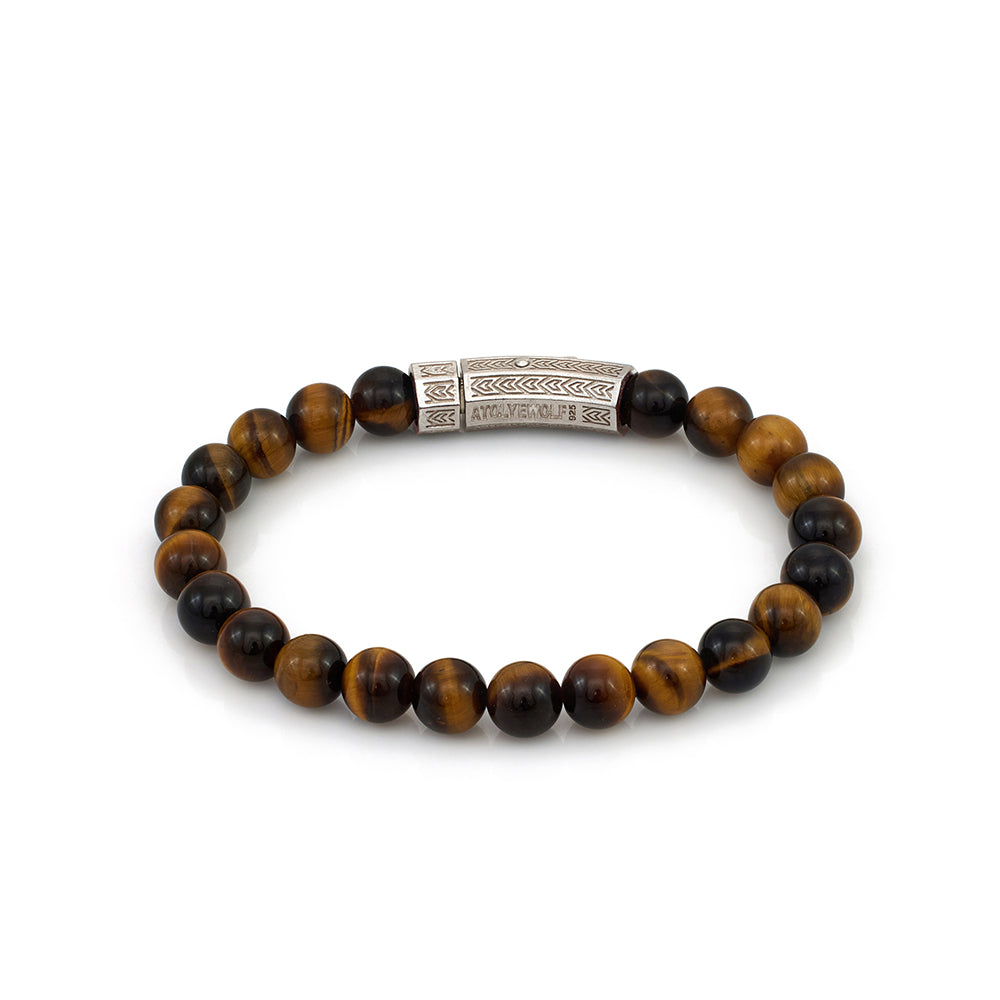
For those who love citrine's golden warmth but want a different natural stone or design, there are lovely alternatives. Tiger's eye carries the same warm energy with golden-brown tones and a shimmering sheen, and it too is traditionally associated with confidence and determination. Agate offers a similar vitality in orange and brown tones.
Atolyewolf's Thick Tiger's Eye Bracelet in Silver combines these warm tones with 925 sterling silver in a modern language. For those who want to wear golden yellow directly, the Zodiac Chain Bracelet in Gold brings the sun's warmth to the wrist with 18K gold plating. For women, the delicate gold-tone pieces in our women's jewelry collection reflect the same cheerful energy.
| Option | Colour Tone | Traditional Meaning | Example Model | Price Range |
|---|---|---|---|---|
| Tiger's eye | Golden brown | Confidence, determination | Thick Tiger's Eye Bracelet | Premium |
| Agate | Orange, brown | Vitality, courage | Triple Natural Stone Bracelet (agate option) | Mid-range |
| Gold plating | Sunny yellow | Abundance, value | Zodiac Chain Bracelet in Gold | Mid-range |
| Personalised | Depends on cord and charm | A personal goal and meaning | Design Your Charm Bracelet | Accessible |
Price ranges are a general guide; you can find current prices on the product pages.
How to Style Citrine and Warm-Toned Jewelry
Yellow and honey-toned stones work best with white, cream, beige, navy and brown. In men's outfits, a warm-toned stone bracelet worn with a white linen shirt and beige chinos creates a fresh, stylish look for summer evenings. In autumn, with a navy knit and brown leather details, this warm tone becomes a more prominent accent.
In women's outfits, a fine gold-tone necklace worn with a cream blouse or a white dress creates a cheerful yet elegant look. Those who want a personal touch can combine gold-plated charms with a yellow or orange cord using the Design Your Charm Bracelet option to carry this energy on the wrist.
Caring for Citrine
Although citrine is a hard stone, its colour can fade over time with prolonged exposure to direct sunlight. It is therefore best stored in a dark, dry place in a separate pouch when not worn. Lukewarm soapy water and a soft brush are enough for cleaning; avoid sudden temperature changes and harsh chemicals. For detailed tips, see our jewelry care page.
Frequently Asked Questions
What is citrine good for?
In traditional beliefs it is associated with abundance, confidence, creativity and optimism. These beliefs are not scientifically proven.
Are the benefits of citrine scientific?
No. The properties known as citrine's benefits are based on traditional beliefs; they hold value as a personal meaning and reminder.
Which zodiac sign is citrine good for?
Because of its warm, sunny energy, it is most associated with Leo, Gemini and Aries; it is also a November birthstone.
How can you tell real citrine?
Natural citrine is usually a pale, soft yellow; dark orange stones with a white base are mostly heated amethyst.
It is time to bring the sun's warmth and joy into your style. Browse the bracelet collection to discover warm-toned natural stones, explore our gold-plated designs, or design your own charm bracelet to create a charm that represents your personal goal.